

Catch Up Time
Clifford E Carnicom
Oct 13 2026
This brief comment today is simply to help the world to get on the same page. I may be mistaken, but somehow I have the impression that much of the population would think it quite the fantasy for bacteria to produce plastic and polymers. For those not mistaken, reading further is not requested and exists solely to your pleasure.
And thus, the bigger picture here involves the advent of synthetic biology imposed upon the global population without knowledge or consent, the positive identification and isolation of the CDB (Cross Domain Bacteria), and the ability of that same synthetic microbe to positively produce polymer materials (in the human body) of the rubber and plastic variety.
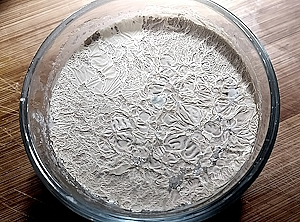
If you resist acceptance of this reality, you do so at your own peril. Here is a photograph (not a solo event…) of what can be demonstrated to be absolutely produced within the human body by the CDB, a subject of multi-decade research at Carnicom Institute (CI):

CDB (Synthetic Biology – Cross Domain Bacteria) Polymer Formation from Culture
I need pardoning as well. Just think, it took me close to three decades to produce the Catch Up phrase for you.
My first use of the term “polymer” occurred at the beginning research stages in 1999 when the infamous “Environmental Filaments” were placed under the scope.
I think my second strong hint came cerca 2012 when infrared spectroscopy became available to CI, and I kept seeing the phrase polyvinyl alcohol show up in my work.
I did not even write on the topic at the time. I suspect I was taken back aghast with questions of credulity. And so I watched and studied for years on end until eventually the culture work caught up with the human biological samples (blood, saliva, urine, etc.). You will found the polymer issue embedded deeply in the work throughout the last decade.
I recall studying the commercial applications of bioplastics in my studies approximately a decade ago as well, and this also is written into my laboratory notes (publicly available).
But now we can skip scores of studies and years of work to have you simply look and think on the photograph above. I understand the reticence as well, because to a point it might even represent good old fashioned conservative science practice.
Curiously, there actually are some polymers produced by naturally occurring bacteria, even if somewhat of a rarity and on a small scale. The category of PHAs (Polyhydroxyalkanoates) is one example. They are eliminated from consideration here, however, because of the lack of polyvinyl alcohol within and the lack of associated synthetic blood. No dice.
What motivated the title today was a chemistry trade journal article received today on the “bioplastic industry”. The capability of genetically engineered microbes to produce plastics and polymers is now mainstream news. It is at the commercial factory level. You may visit the ChemEurope.com newsletter of Oct 13 2026 for an example.
I figured it was time to help us all catch up, as we often remain decades behind in our awareness of even public knowledge , and then substitute that deficiency with belief systems and public debate. Time to catch up….
Any ignorance or denial also does not help matters if we are trying to understand why thrombosis and blood clotting are a rather big deal by now.
With best regards,
Clifford E Carnicom
Born Clifford Bruce Stewart
Jan 19 1953
